Acumatica ERP Solutions by Industry
Ten verticals we have delivered Acumatica work in. Each page covers the problems that come up in that industry, what we built to solve them, and which Acumatica edition features actually apply.







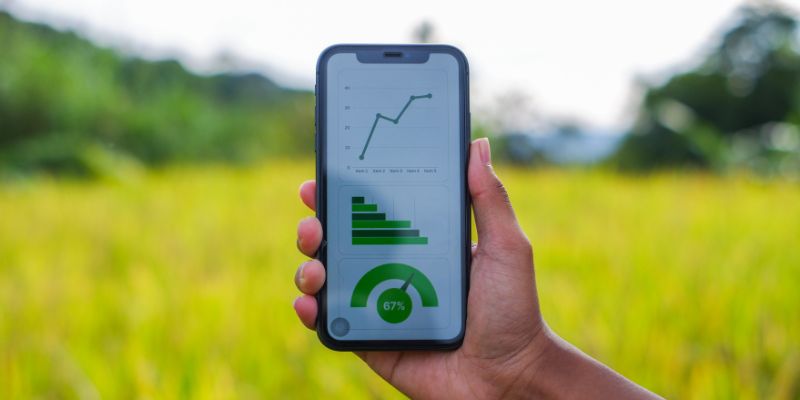
What We Build in Each Vertical
- Construction - AIA billing, retainage, job cost rollups, and progress billing screens the Construction Edition does not cover out of the box.
- Distribution - multi-warehouse allocation, EDI, landed cost, and available-to-sell logic across channels.
- Manufacturing - production orders, shop floor data capture, MRP tuning, and quality tracking.
- Automotive - parts catalogs, VIN-level tracking, warranty claims, and dealer network reporting.
- Healthcare - HIPAA-conscious integrations, supply chain traceability, and payer reconciliation.
- Financial Services - multi-entity consolidation, fee schedules, and audit-ready approval workflows.
- Energy - field service scheduling, asset maintenance, and joint-venture cost allocation.
- Agriculture & Food and Beverage - lot traceability, catch weight, and recall reporting.
- Retail - omnichannel inventory sync, Amazon settlement reconciliation, and POS integration.
- Professional Services - project accounting, resource utilization, and time and expense workflows.
Not on the list? The framework work is the same regardless of vertical. Tell us the problem and we scope it.
How Industry Work Usually Starts
Most industry projects reach us one of two ways. A business hits a gap between how their vertical actually operates and what the stock Acumatica edition does, and needs a screen or a workflow built to close it. Or a VAR with a client in that vertical needs the framework depth for a build they do not want to staff internally - see white-label development for VARs.
Either way the shape is the same: we scope it, quote a fixed price on defined scope, and build it as upgrade-safe xRP code. Full detail on everything we build.
Where the Stock Editions Stop
Acumatica ships strong industry editions, and for a lot of businesses the edition is genuinely enough. The gaps show up at the edges of a vertical rather than the middle of it. Construction Edition handles AIA billing well until a general contractor needs retainage released on a schedule their owner dictates. Distribution Edition allocates inventory cleanly until available-to-sell has to account for a channel that reserves stock before payment clears.
These are not deficiencies in the product. They are the difference between how an industry works on average and how your business works specifically, and they are exactly the kind of thing the xRP framework exists to close. The practical question is never whether Acumatica can do it. It is whether the work belongs in a customization, a configuration change, an integration to a system that already solves it, or a process change on your side. We answer that in the technical review, and the answer is often cheaper than the one people expect.
Vertical Knowledge Versus Framework Depth
Two different kinds of expertise get conflated in ERP projects. Vertical knowledge is understanding that catch weight and lot traceability are non-negotiable in food and beverage, or that joint-venture cost allocation in energy has audit implications a generic cost rollup will not satisfy. Framework depth is knowing how to build that in Acumatica so it survives the next three upgrades.
Most projects fail on the second one. A partner who knows your industry cold can still produce a build that breaks every release, because vertical fluency does not teach you where the graph extension boundaries are. We lead with framework depth and get the vertical detail from you and your team, which is usually the faster direction. You already know how your business runs. What you need is somebody who can express it in code that Acumatica will still honor in 2028.
That also means the vertical list above is a description of what we have built, not a limit on what we will. The underlying work - screens, workflows, integrations, reporting, Modern UI migration - is the same regardless of the industry it serves. If your vertical is not listed, the scoping conversation is identical.
Industry Work and the 2026 R2 Deadline
One thing cuts across every vertical right now. Acumatica deprecated Classic UI in 2026 R2, and Chrome and Edge are removing the XSLT support Classic UI renders through. Industry-specific screens are usually the most heavily customized screens in a tenant, which makes them the most exposed. A construction firm with a decade of custom billing screens has more migration surface than a business running close to stock. Modern UI migration is worth scoping now if your vertical customizations predate 2025 R2, and our 2026 R2 breakdown covers what else changed.
Get a Fixed-Price Quote - We Respond Within 24 Hours
Email: acumatica@envinse.com · Phone: 737-377-3839
Get a Fixed-Price Quote →